Postcards from Morocco
What can we learn by returning to a destination instead of going somewhere new?
I first visited Morocco in 2011. I was a 22-year-old exchange student whose eyes were being opened to the wonders of travel. Like the hand-woven rugs expertly laid out by bazarnistes, life felt like something unfurling ahead of me. Curious to explore as many places as I could, I dreamt up destinations and ticked my way though an ever-expanding bucket list.
It was during this time that I first ventured to Morocco. I travelled with my sister and a group of exchange students I met during my semester at Sciences Po Paris. We booked forty-euro Ryanair flights from Paris to Marrakech, and signed up for a 7-day organized bus tour into the Sahara Desert. We haggled for scarves and camel leather bags in the souks, drank Coca-Colas with Arabic etched on glass bottles, rode a pack-train of camels into the desert, splurged on souvenir rugs, and rocked a few kasbahs. Though we barely scratched the surface of Morocco’s rich history and culture, it was a formative experience for me.
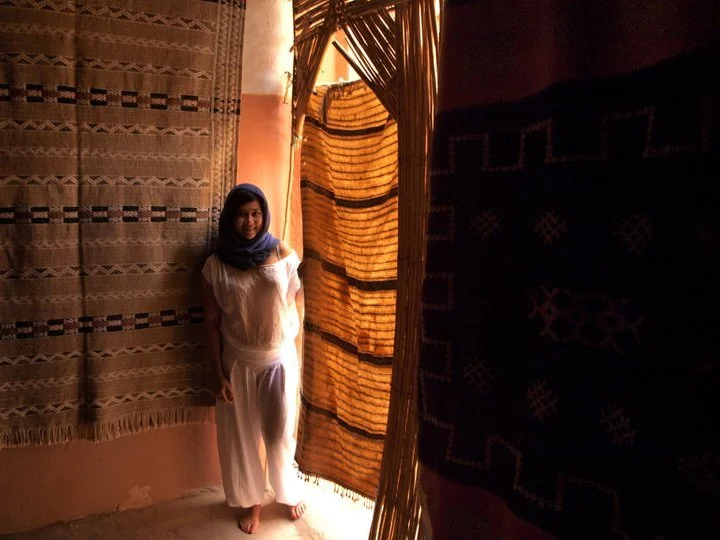
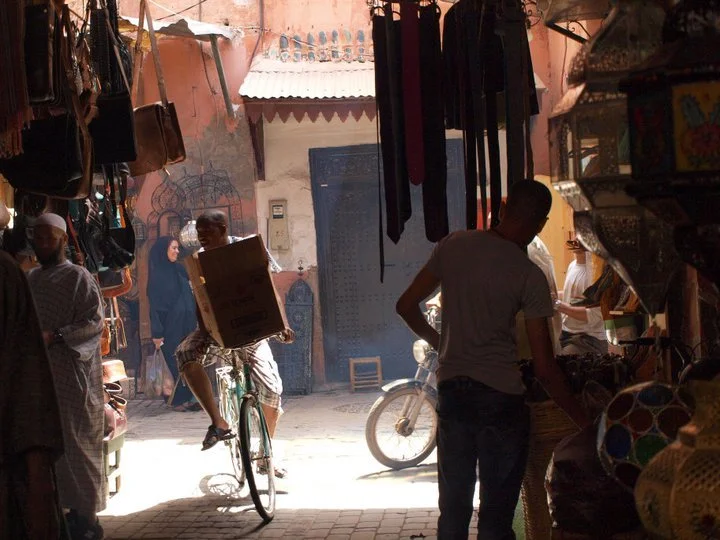
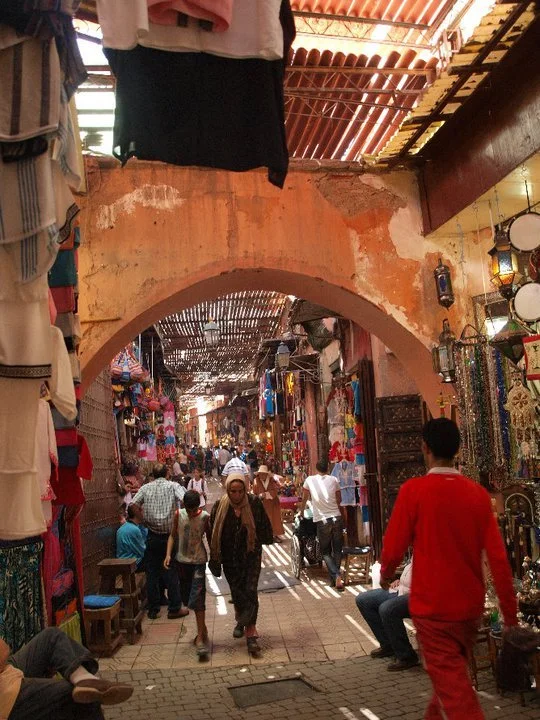
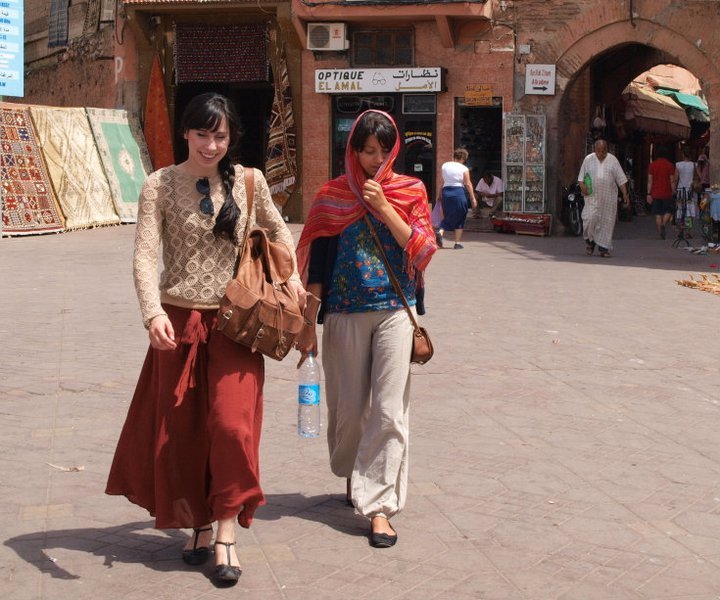
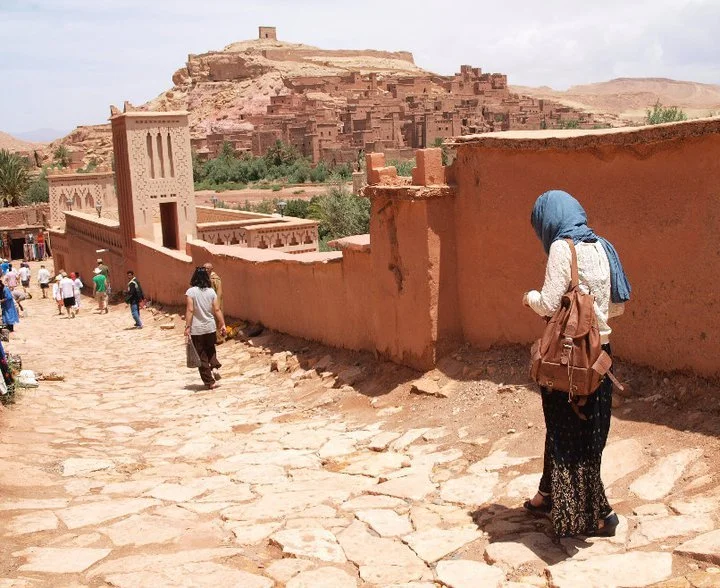
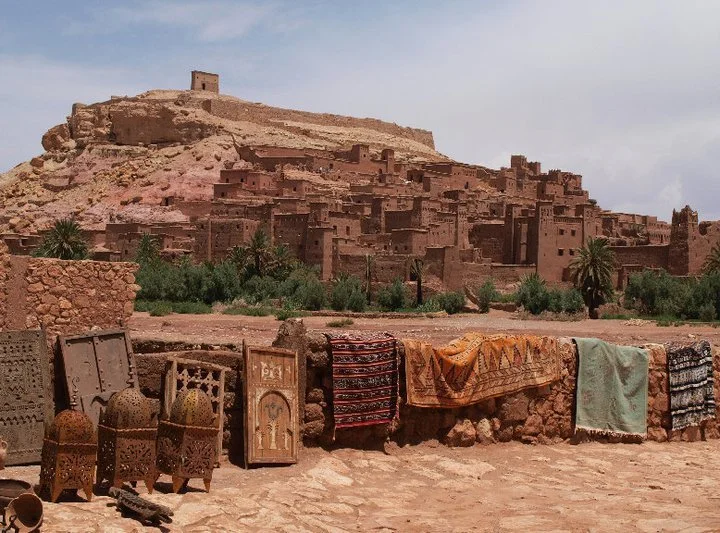
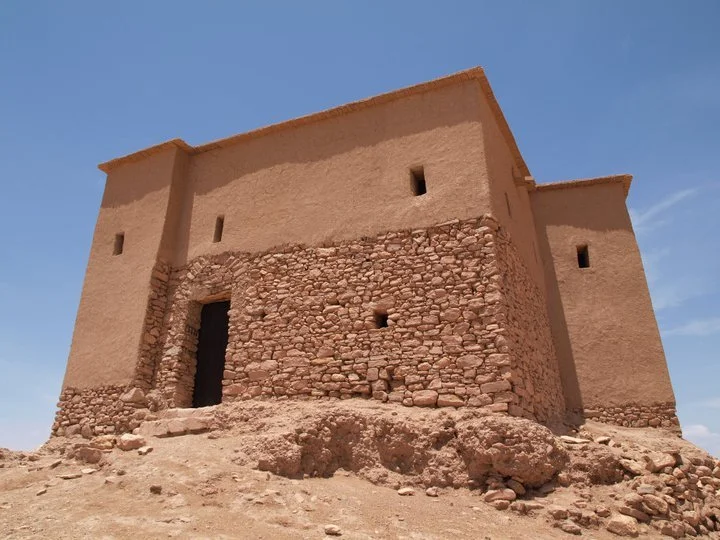
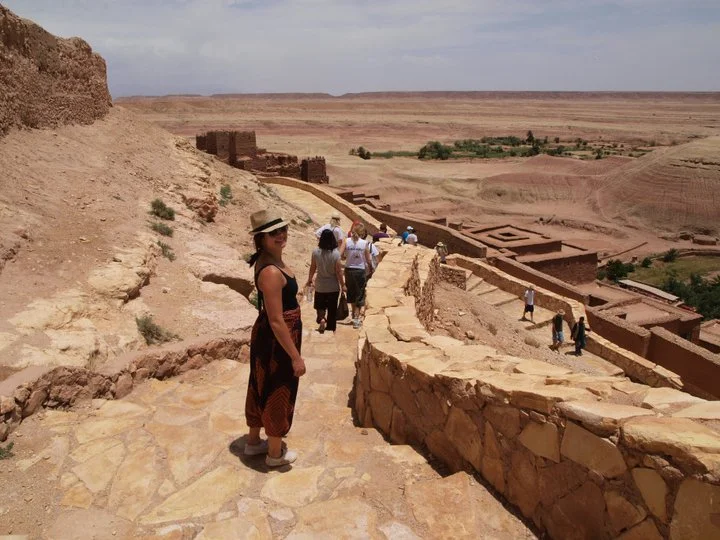
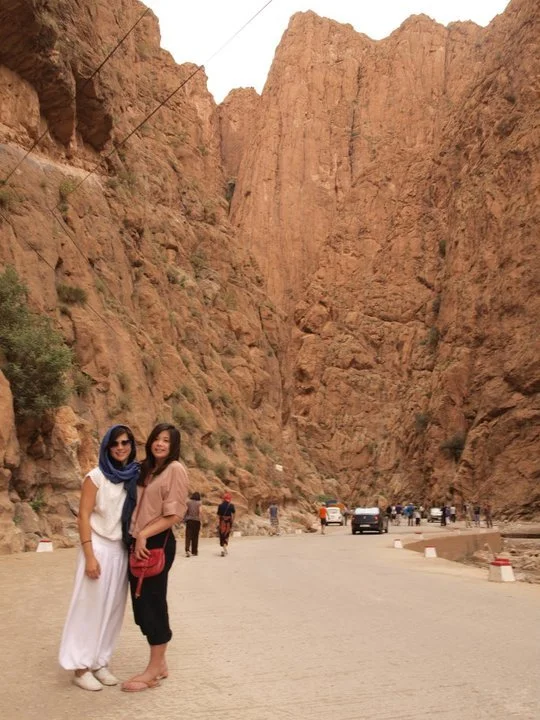
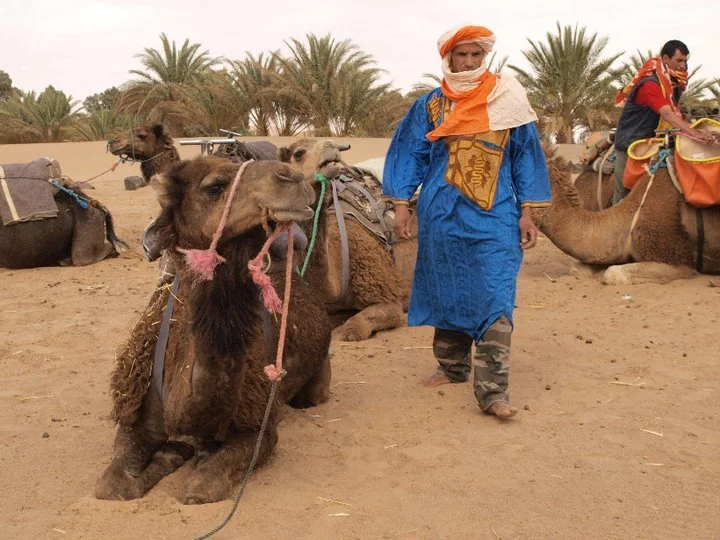
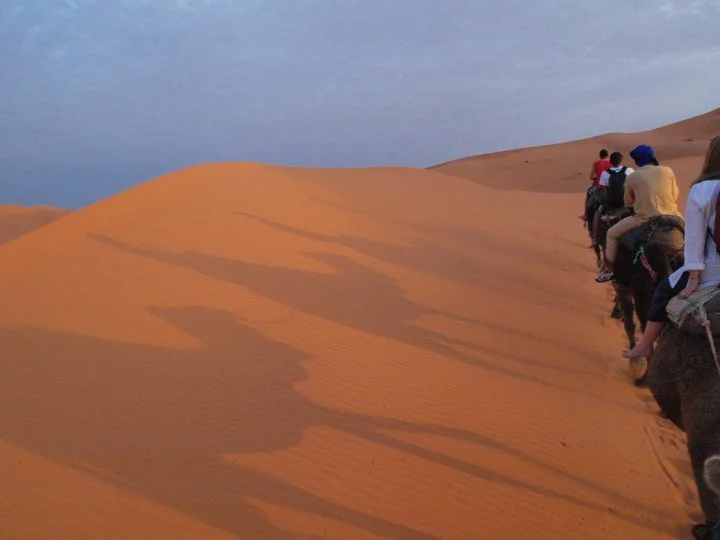
Photos from my 2011 trip, taken on an old Canon t3i or iPhone 4s.
I wasn’t sure I’d ever return, but that changed this year during a trip to Morocco with my husband, Luke. It was nearly fifteen years since my first visit, and I was a new version of myself in search of different things. I also wanted to explore Morocco at a slower pace than that whirlwind bus tour, with more agency and flexibility in the hopes of engaging more deeply. We planned to stay for a month and booked our first week in Marrakech, intentionally leaving the remaining three weeks flexible.
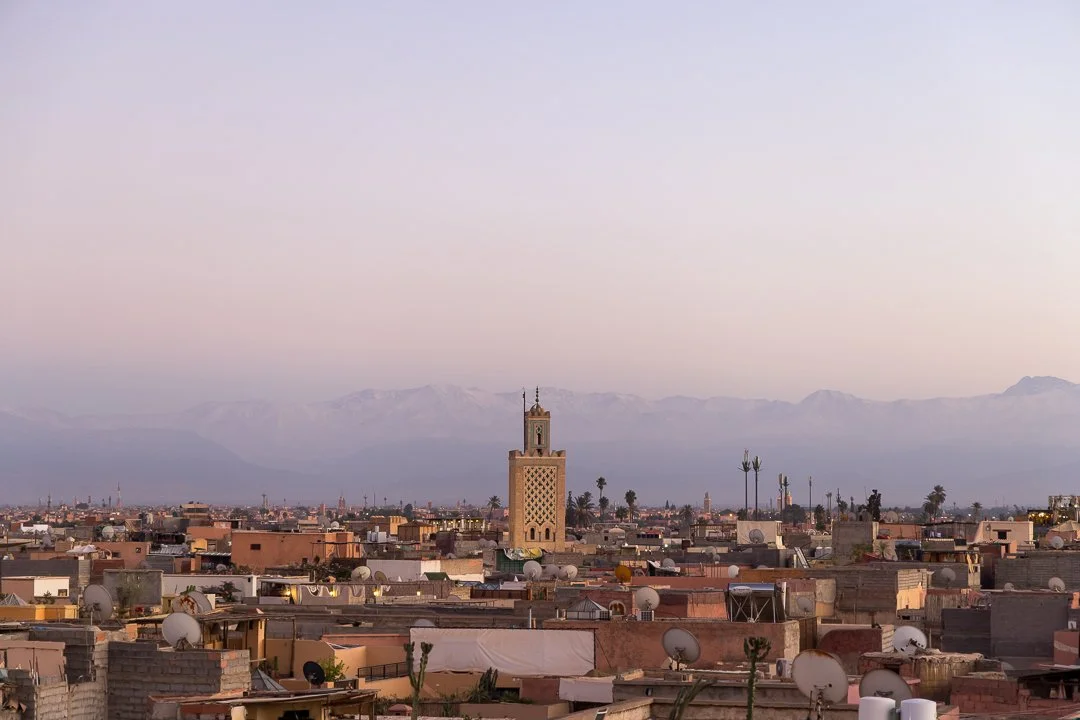
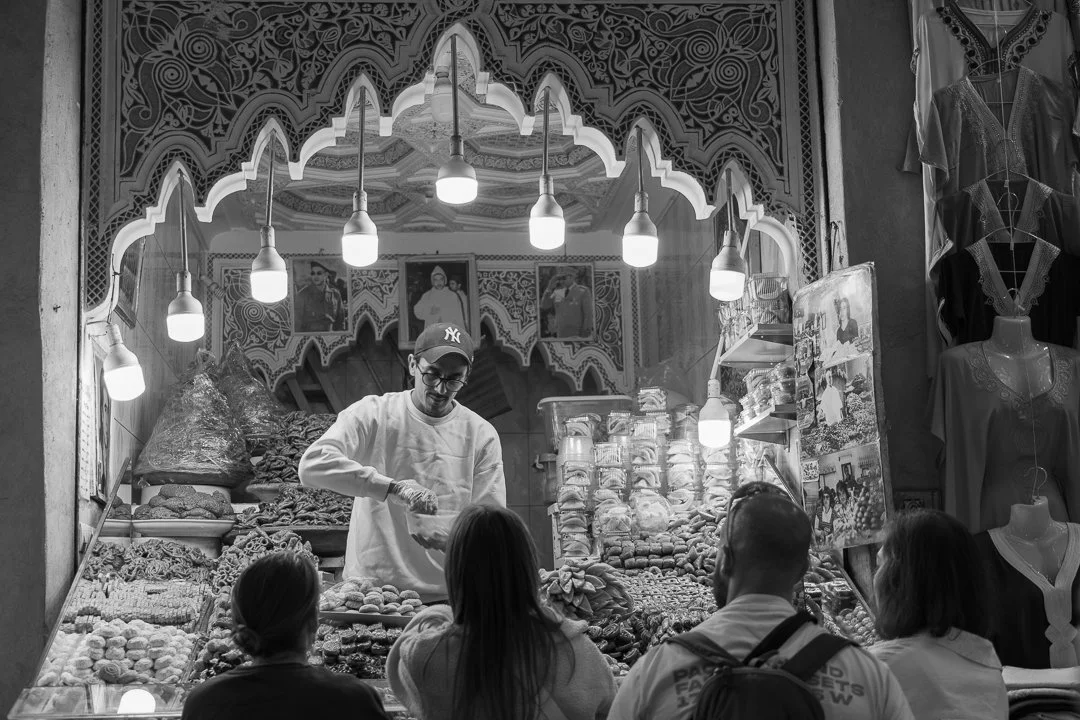
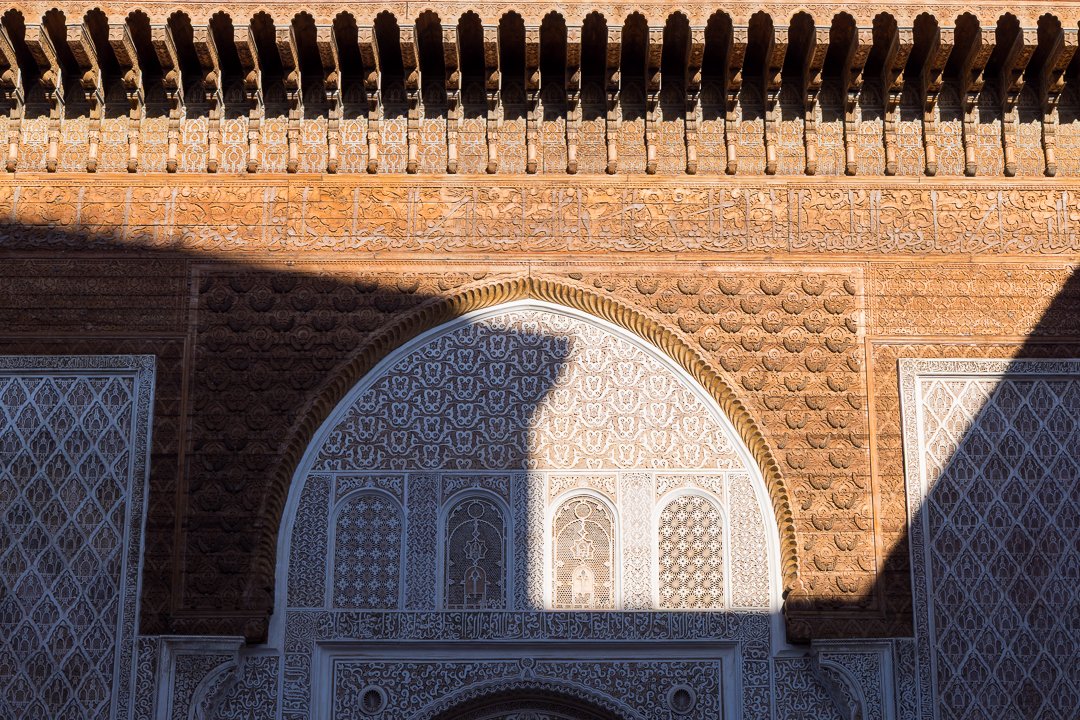
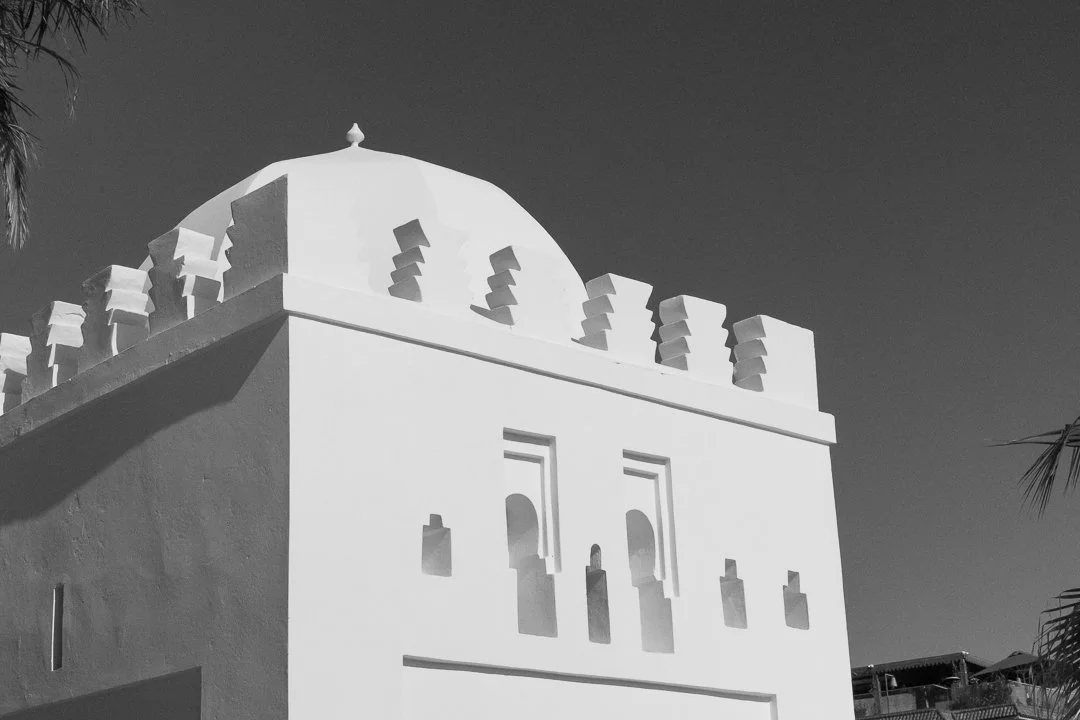
We worked remotely in Marrakech, stepping out for long breaks to observe the rhythms of the souks. We were keen to get up early and explore, but the medina did not stir until the November sun warmed its labyrinthine streets. We witnessed markets spring to life, watched crowds gather around landmarks, and gradually formed a mental map of the area. I realized how little of Marrakech I had actually seen before, as we did not wander very far from the snake charmers of Jemaa el-Fnaa square. I had missed the architecture of the Ben Youssef Madrasa, the treasures of the Musée de Marrakech, the collection of rich photographs at the Maison de la Photographie, and its rooftop cafe. Built a fraction higher than its neighbours, this rooftop became my favourite place to sip on mint tea and watch the sun set behind minarets in the skyline, the maghrib emanating from loudspeakers tilted in all directions.
After a week in Marrakech, it was time to take a road trip. We wound our way through the Atlas Mountains with Tinariwen on loop in the rental car. Riad Berber Towers in Imlil was the perfect home base for day hikes through neighbouring villages, past shepherds and their herds, up to high passes for a peek into the next valley. After stretching our legs, we drove to Ait-Ben-Haddou, a 7th-century ksar in the foothills of the High Atlas famous for appearing in Hollywood films like Gladiator and Game of Thrones. Rising early despite the chill, we set off to explore and had the entire UNESCO site to ourselves (not a single tour bus in sight, unlike my first visit). We strolled through narrow passageways made of centuries-old mud bricks until we crested the village’s hilltop and I discovered that the kasbah I photographed in 2011 (see above) had collapsed in an earthquake. There are roughly 600 ksours and 400 kasbahs along the ‘Road of A Thousand Kasbahs’, with ongoing efforts to restore and preserve them. We found Kasbah Amridil to be an enlightening stop thanks to a guided tour through its interpretive museum.
On the road again, we continued towards the Sahara until the turnoff to Todra Gorge. It was one of the many scenic stops we made on our 2011 bus tour, which I only realized after looking at old photographs. Whisked from point to point, place names and geography were lost on me. This time around required navigation. We mapped our own route and chose our own stops, sometimes on a whim. This time, what drew me to the Todra Gorge was the rock, and the opportunity to climb it. I was introduced to a 6-pitch route called Pilier du Guetteur (5.10c) by a local guide who didn’t seem keen on my first pick, a mellow 10-pitch route he probably would have soloed. The treat of afternoon rain nudged me in the direction of a shorter, albeit harder, climb. It turned out to be a beautiful route! I fell on a couple hard moves, but mostly cruised through each pitch, leading the easier ones. We topped out on a plateau with an incredible view into the heart of Todra Gorge, where tourists were snapping photos exactly as I had with my sister before (photo below). I hadn’t just looked at the rock, but moved through it, roped up with a local guide and communicating exclusively in French, pushing myself and grinning down at the tiny figures below.
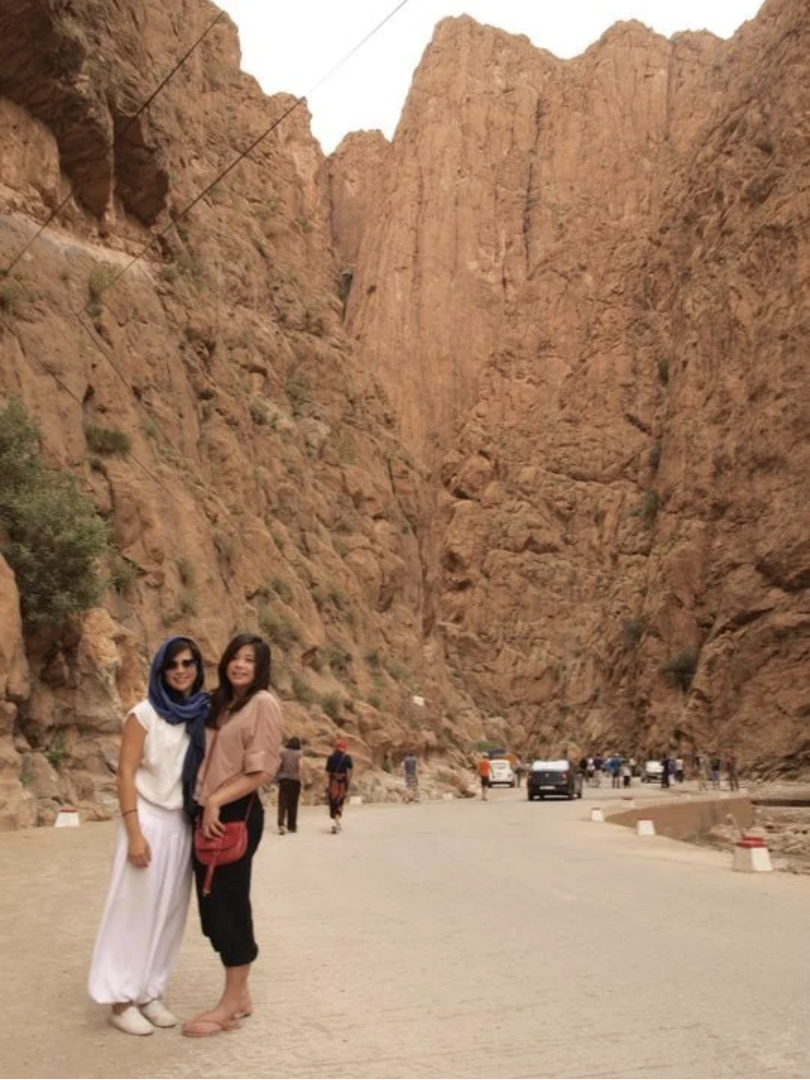
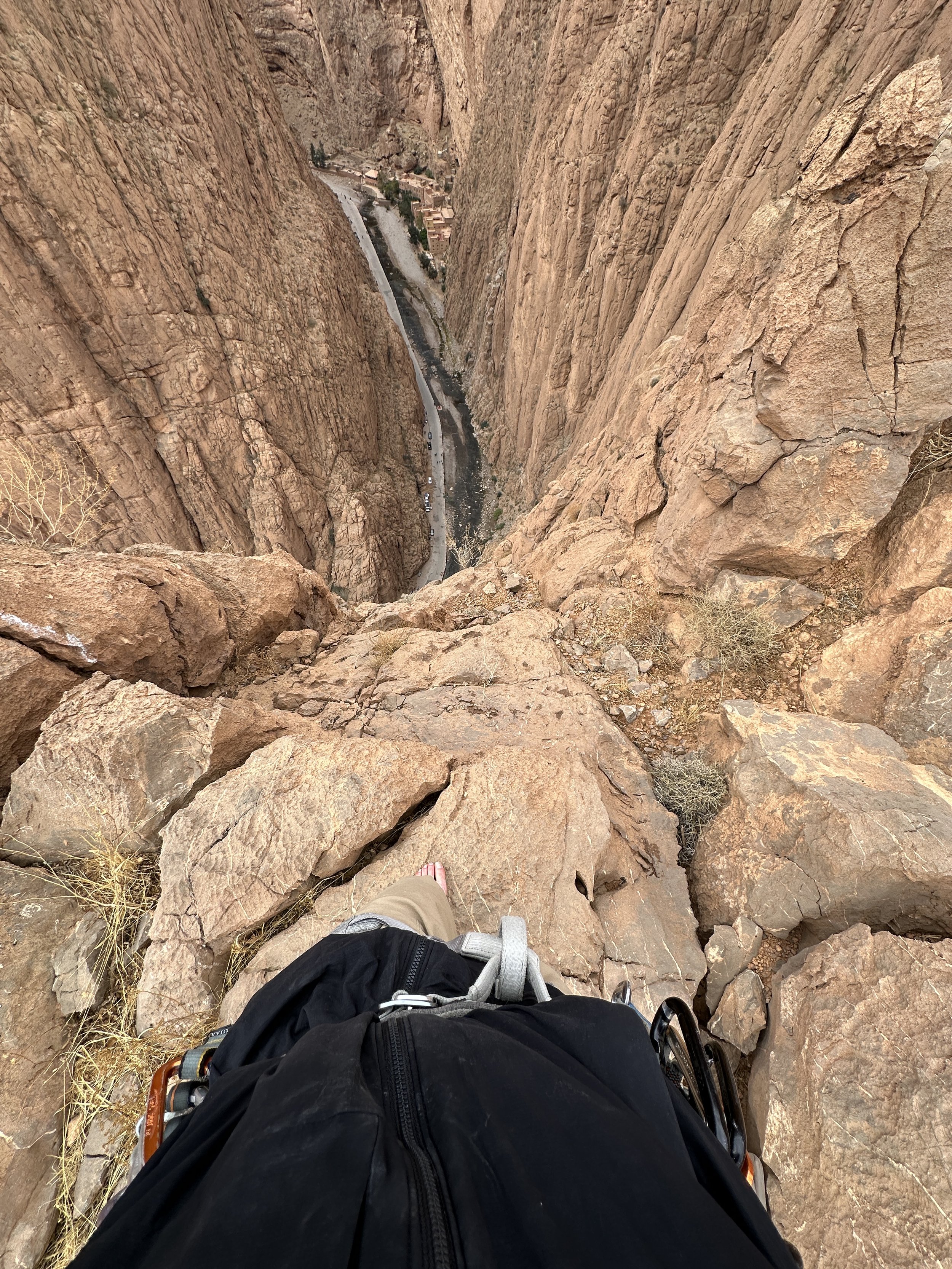
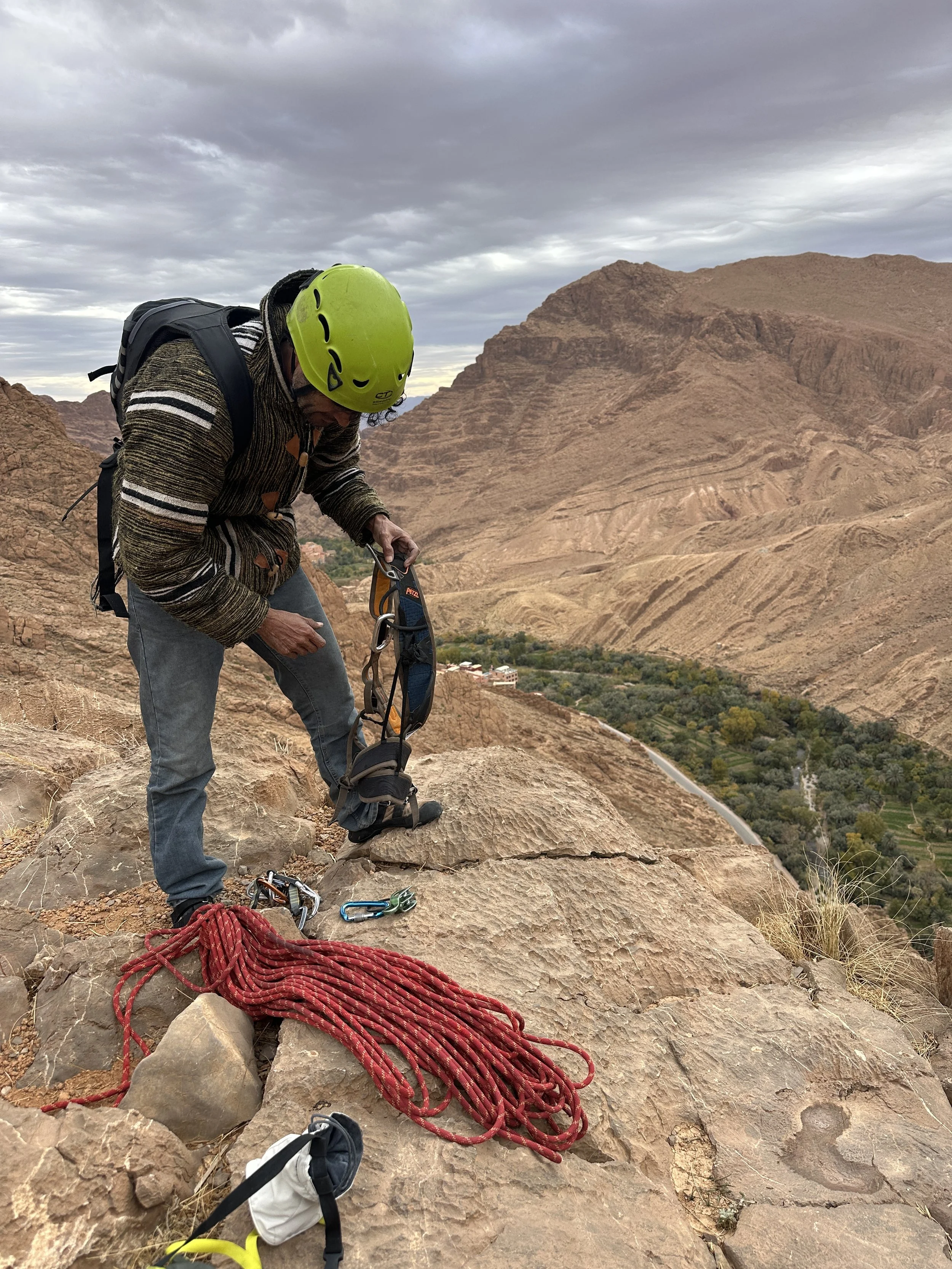
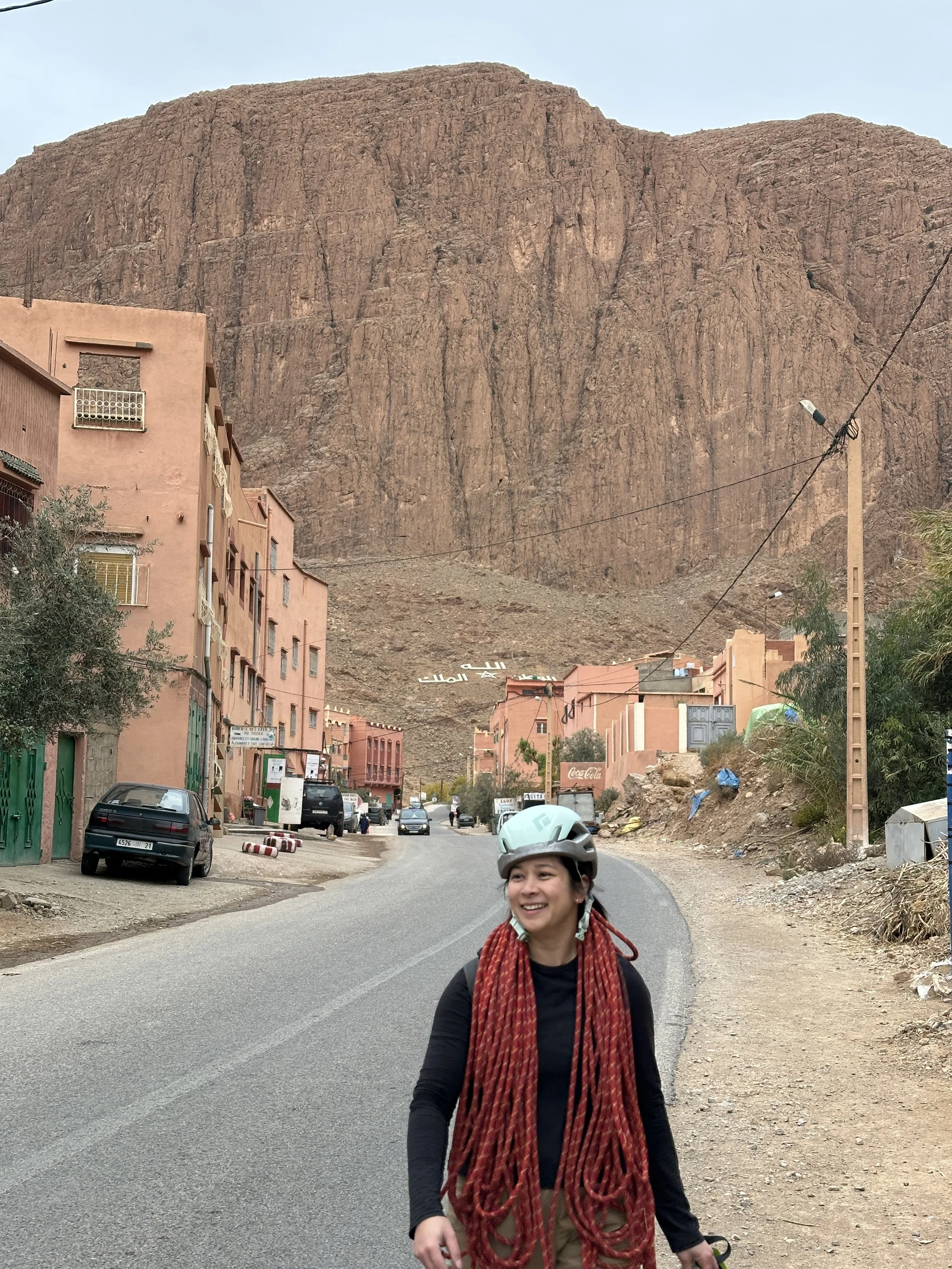
Photo 1: Me and my sister in 2011. Photos 2-4: Climbing Pilier du Guettuer (5.10c, 6 pitches).
Luke and I continued in the direction of the Sahara. The landscape grew increasingly arid until rose-gold dunes sprang from the horizon. We checked into a riad on the edge of the sand, dashed out to scale the ‘tallest’ dune, and bounded back down in a thrilling descent. Over the next few days, we explored the dunes on foot and on horseback, in the midday sun and and fading dusk.
We had originally planned to turn back to the coast, but our curiosity about Fez and inflexible car rental policies inspired us to change course. We drove to Fez and felt relieved to park after the insanity of rush hour traffic. We wandered through Fez el-Bali—the oldest and largest car-free urban pedestrian zone in the world—on foot, fending off scammers known for targeting lost tourists. My younger self had wanted to see the famous tanneries of Fez after seeing photos in the vein of National Geographic. We saw and smelled the tanneries from balcony of leather tannery #10. I am more aware of having overlapping or conflicting feelings than when I was young, and as I captured the centuries-old tradition unfolding before us, I felt conflicted about my voyeurism, as well as the animal hides and harmful chemicals involved in the process. Fez triggered all our senses, so on our last night, I indulged in my first hammam. Laying naked on a warm marble table, I felt comfortable in my skin. The full-body scrub roused memories of being bathed as a child, and was deeply relaxing.
We returned the rental car in Marrakech and hopped on a bus to Imsouane, where we planned to spend our last week. It is a coastal town where surf culture and Moroccan culture collide. We were humbled by the power of the bay’s longshore current and captivated by magical sunsets. We also noticed the rubble of old buildings and began to learn about issues laying beneath the town’s idyllic facade, including mass government-led demolitions and rapid gentrification.
We spent our last evening in the orange glow of a sunset, perched high on a cliff, watching the sets roll in. Beneath a canvas sky of colours only nature can devise, I quietly reflected on the value of returning to places we’ve already been and making the effort to see them with fresh eyes. For me, part of that effort involved traveling slowly and intentionally—we genuinely enjoyed seeing the same landmark at different times of the day, returning to a restaurant we loved, and summiting the same dune in different weather. We had time to learn people’s names, listen to stories, and share conversations in my third language. We also had time together to take in scenery, sit side by side lost in our own books, to delve into deep conversations, or to simply drive in silence.
High on that cliff, I also reflected on the person I’d become since my first visit in 2011. My curiosity towards people and places hadn’t vanished, but I had arrived at a different place in my life. In my early twenties, I was fixated on something intangible lying ahead. Now in my mid-thirties, I feel truly comfortable in my skin and presently on a path of my own design. Rather than something unfurling ahead of me, life feels more like something I am weaving intentionally, slowly, with more care for the process than the outcome.
Ultimately, this trip reminded me that places are worth revisiting for they are ever-changing, and so are we.